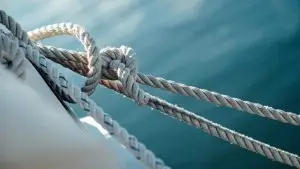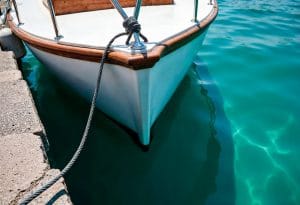
Anchoring correctly is one of the most important maneuvers in recreational boating. Choosing a good anchorage not only ensures comfort but also safety for the vessel and its occupants. One of the biggest risks is... dragging, This means the anchor doesn't hold properly and the boat drifts uncontrollably. In this article, we explain how to choose the right anchorage and what to do to avoid this problem.
What to consider when choosing an anchorage
Before dropping anchor, it is essential to analyze the surroundings. Not all seabeds or conditions are suitable for anchoring.
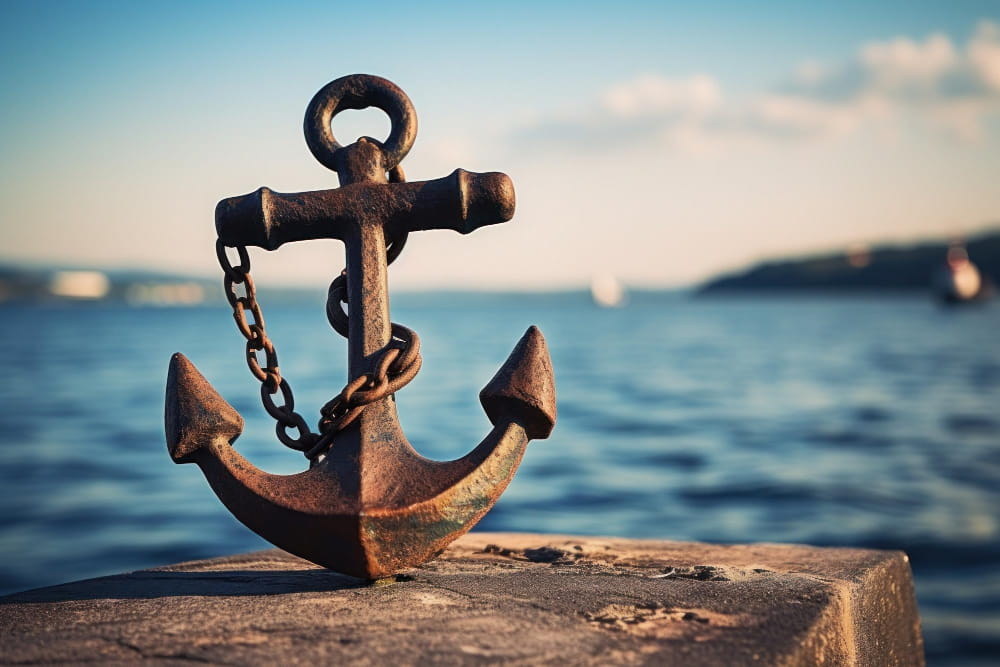
Type of seabed
The background is one of the most determining factors:
- Sand → The best for anchoring, it offers good grip.
- Mud → also suitable, although it may require more string
- Rock → Not recommended, the anchor may not hold
- Posidonia → Always avoid it, both for environmental protection and because of poor grip
A good understanding of the seabed will help ensure that the anchor is properly set from the start.
Protection against wind and waves
Seek out areas sheltered from the prevailing wind. Even if the sea is calm at that moment, you should anticipate possible changes.
Anchoring in a sheltered or leeward cove reduces the risk of sudden movements and improves the stability of the vessel.
Available space
It is important to calculate the space needed for swinging, that is, the circular movement that the ship will make around the anchor.
You must ensure that there are no other vessels, rocks, or structures nearby within that radius.
How to properly fund step by step
A good anchoring depends not only on the location, but also on the technique.
1. Slow and controlled approach
Approach the chosen point against the wind or current, gradually reducing speed.
2. Anchoring
Drop the anchor in, never throw it out. This prevents tangles and improves its placement on the seabed.
3. Thread appropriate chain
Chain length is key. As a guideline, it's recommended to use 3 to 5 times the depth (more if the sea is rough).
4. Tighten and check grip
Once anchored, give a small reverse with the engine to ensure that the anchor has caught properly.
5. Check references
Take reference points on land or use GPS to check that the vessel is not drifting.
Signs that you're dragging
Detecting stumbling early can prevent risky situations.
Some clear signs are:
- Changes in position relative to ground references
- Continuous movement in the same direction
- Uneven tension in the chain
- GPS anchoring alarms
If you detect any of these signs, it's important to act quickly.
What to do if the anchor doesn't catch
If the anchor does not fix properly:
- Pick it up and try again at another spot
- Increase the chain length
- Slightly change the anchoring position or angle
Insisting on a bad bottom or unsuitable conditions usually ends in dragging.
Best practices for secure funding
To minimize risks, keep these recommendations in mind:
- Check the weather forecast before anchoring
- Always use the appropriate equipment (anchor, chain, windlass)
- Avoid anchoring at night if you are unfamiliar with the area.
- Respect protected areas such as Posidonia seagrass meadows
- Maintain periodic monitoring of the position
At Anclademia we teach these maneuvers practically in our nautical courses, because good anchoring is not just theory: it is an essential skill for safe navigation.