Course availability and options
Consulting upcoming calls...
Skills
What you will gain from this training
01
Recognize threats of protection
You will develop this skill through clear, practical methods focused on real-life situations.
02
Implement preventive measures
You will develop this skill through clear, practical methods focused on real-life situations.
03
Participate in response procedures
You will develop this skill through clear, practical methods focused on real-life situations.
Programme
A clear, practical and progressive learning path
The objective of basic training in maritime security is to enable students to:
- Collective participation in contingency or emergency procedures
- Information on situations affecting ship protection
- Identification of the processes to be followed in the face of the need for protection
The basic training in maritime security requires completion of the course under the following conditions:
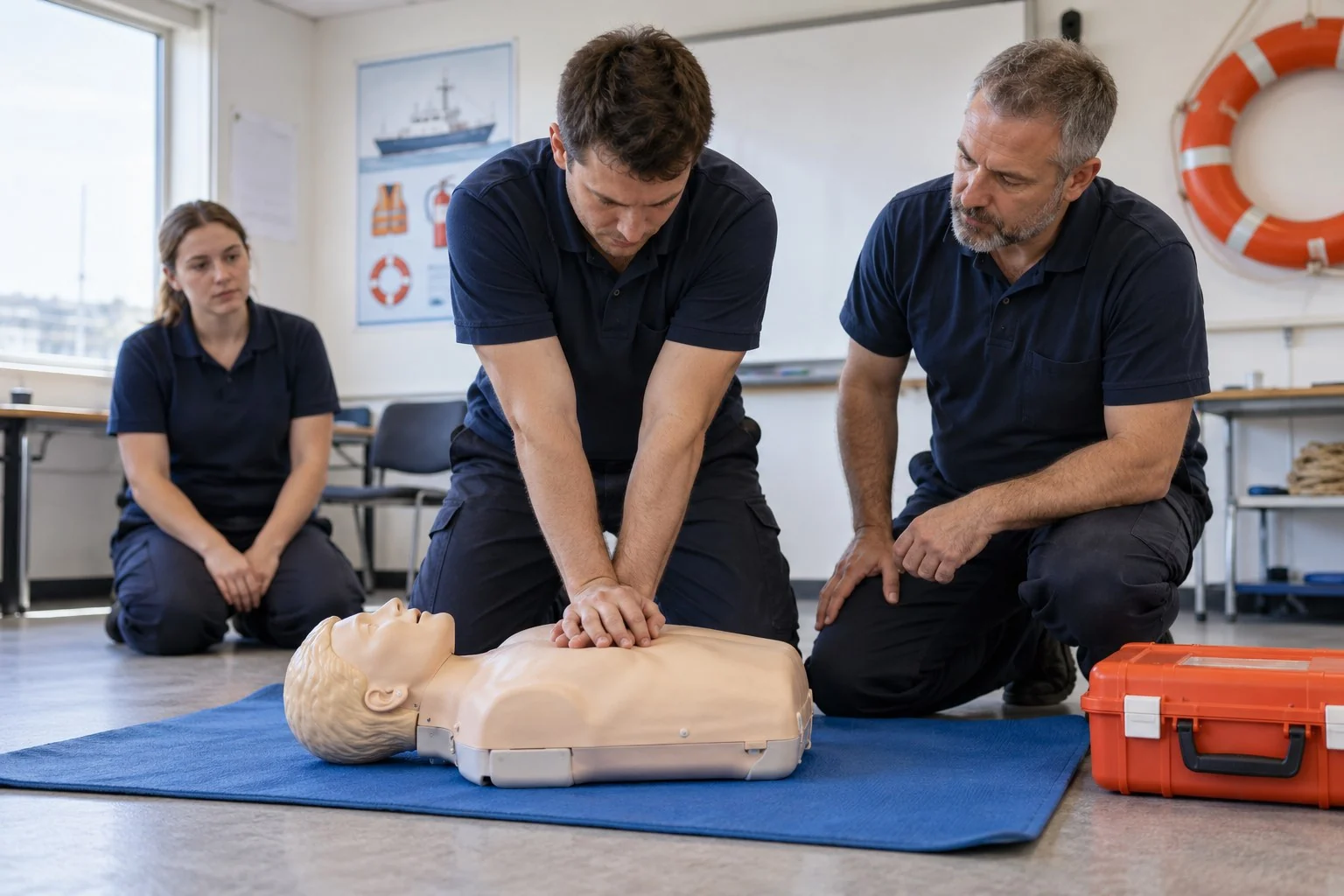
- 8 hours duration, 6 theoretical and 2 practical
- Face-to-face course
- Compulsory attendance at both theoretical sessions and practice
Book your place in the Basic Training in Maritime Protection
This course is available all year round but consult with Anclademia the nearest available dates.
This course in basic training in maritime training is intended for those persons who are of age or with permission for persons over 16 years of age, and with existing ID card or passport, who wish to to acquire the main competences to perform on a ship, although in itself it is not sufficient for its application in the professional field.
This is therefore a necessary title for those ship crew members who need to be also obtain the certificate of specialty in ship security and port facilitiesunless they have previously obtained the certificate of ship security officer.
And thanks to this course crew members will learn to collectively handle situations where on-board protection is requiredfrom the identification of such circumstances to their communication and participation in their development.
Its officiality is international, since forms part of the standards of training, certification and watchkeeping for seafarers -STCW courses- and is based on the regulations in force in the agency that facilitates it, the Directorate General of the Merchant Marine.
Before you start
Requirements and what is included
What you need to check
- Valid personal documents
- Applicable medical or professional requirements
- Prior review of degrees where appropriate
With Anclademia
- Vocational-oriented training
- Teaching materials and teacher support
- Certification and formalities information
Your navigation handbook
Complete guide to Maritime Security
Start with the essentials and open only the topic you want to explore. All the official information remains complete, presented in a more visual way.

Price of Basic Training Course in Maritime Protection1 · 4 key pointsView information
Basic Maritime Security Training
- 12 h theoretical
- 12 h practice
- Teaching materials
- Student insurance
Frequently asked questions
What is the expiration of Basic Training in Maritime Protection?
What is the expiration of Basic Training in Maritime Protection?
Unlike most training courses in the STCW courses, basic training in maritime security does not have an expiry date, so its validity is indefinite.
Can Basic Training in Maritime Protection be done online?
It is not possible to carry out the Basic Training in Maritime Protection online, as it includes two hours of training that must be carried out.
What are the professional options for basic training in maritime protection?
In itself, the Basic Training in Maritime Protection does not offer the possibility of performing professional functions, but it is essential to take it in order to work as a crew of any ship, as it instructs in skills for the protection of the boat.
Is it compulsory to attend basic training in maritime protection?
Given the shortness of training, it is not possible to leave at 10% of theoretical hours, since there are only six hours, nor, of course, the two hours of practical learning included in the course. Therefore, full face-to-face attendance is mandatory.