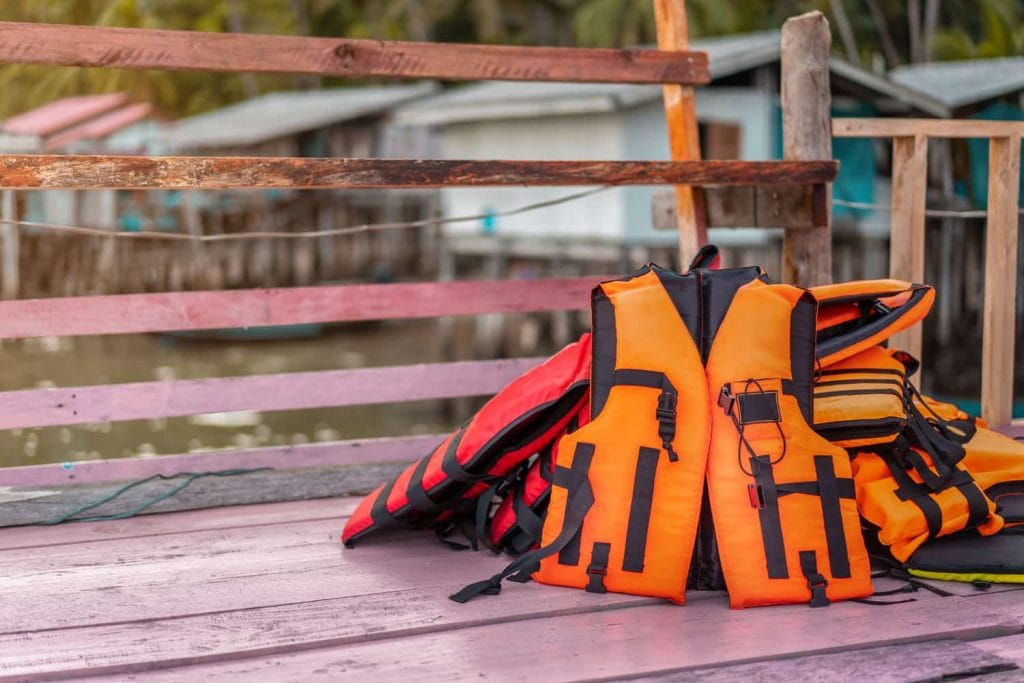
The life jackets are a fundamental element of security in any nautical activity. Whether you are sailing on a motorboat, practicing water sports or simply enjoying a kayak ride, have a suitable vest can make a difference between life and death in case of an accident. In this article by Anclademia, we will review the main types of life jackets that exist, their characteristics and in what situations it is recommended its use.
What is a life jacket?
A life jacket, also known as personal flotation device (PFD), is designed to keep a person afloat in water. His main function is prevent drowning, providing buoyancy enough to keep the head above water, even if the user is unconscious or cannot swim.
General classification of life jackets
exist different types of life jackets classifieds according to their level of buoyancy, design and use expected. European regulations (ISO 12402) and international regulations divide them mainly in four categories:
1. Buoyancy aid vests (level 50 N)
These vests offer 50 newtons of buoyancy and are designed to users who know how to swim and they meet near the coast or in calm waters. Are light, comfortable and allow a good freedom of movement, which is why they are commonly used in activities such as paddle surfing, kayaking or sailing.
However, They do not turn an unconscious person face up, hence They are not recommended in high-risk or open-ocean situations..
2. Level 100 N life jackets
They provide 100 newtons of buoyancy and are designed for people who don't know how to swim or what may need help staying afloat. These vests are designed to turning an unconscious person face up, keeping your head above water.
They are suitable for inland waterway navigation either close to the coast. Although they are bulkier than the 50 N ones, they offer a greater passive safety.
3. 150 N level life jackets
With 150 newtons of buoyancy, these vests are ideals for the open sea navigation, adverse conditions and long journeys. They can be automatic (they are inflated with a CO₂ system when they come into contact with water) or manuals (the user activates the mechanism).
They are designed to gensure that the body of an unconscious person remains in a safe position. They are an excellent option for experienced sailors, sport fishermen and ship crews for recreation.
4. Level 275 N life jackets
They are the most advanced and offer 275 newtons of buoyancy, which makes them suitable for extreme conditions, as high seas, bad weather either commercial navigationThey are also recommended when wearing heavy protective clothing that may hinder flotation.
This type of vest is common in professional environments, industrial vessels and situations where the security must be guaranteed at the highest level.
Life jackets for children
The life jackets for children must be chosen with special care. It is essential that the vest is adapted to the weight and size of the minor, and that it has high neck, straps between the legs and reflective elements. In addition, it is important that the child tries it before using it in the water to check its comfort and effectiveness.
Pet vests
Yes, there are also life jackets for dogs. They are very useful if you usually take your pet on board.. They are designed for provide buoyancy and they have handles to facilitate rescue in case of falling into the waterNot all dogs swim well or can stay afloat for long, so this is a recommended safety measure.
Tips for choosing the right vest
- Make sure it has the CE mark or complies with ISO regulations.
- Choose the right buoyancy level for your activity.
- Check the fit: It should fit snug but comfortable.
- Regular inspection: Check that it is not damaged and, if it is inflatable, that the inflation system is working properly.
- Water test: familiarize yourself with how the vest behaves in the water.
He life jacket It is not an optional accessory, but a essential element safety in the aquatic environment. Choosing the right type for each situation can save lives, so it is important to know the different options available and not underestimate their usefulness. In our nautical school, we always insist on the Safety first, and the proper use of a life jacket is the first step to enjoying the sea with peace of mind and responsibility.