
Anclademia guide
Essential nautical knots every skipper should know
The nautical knots every skipper should master for PER and safe boating: which ones matter, how to tie them and their practical use aboard.
Article contents
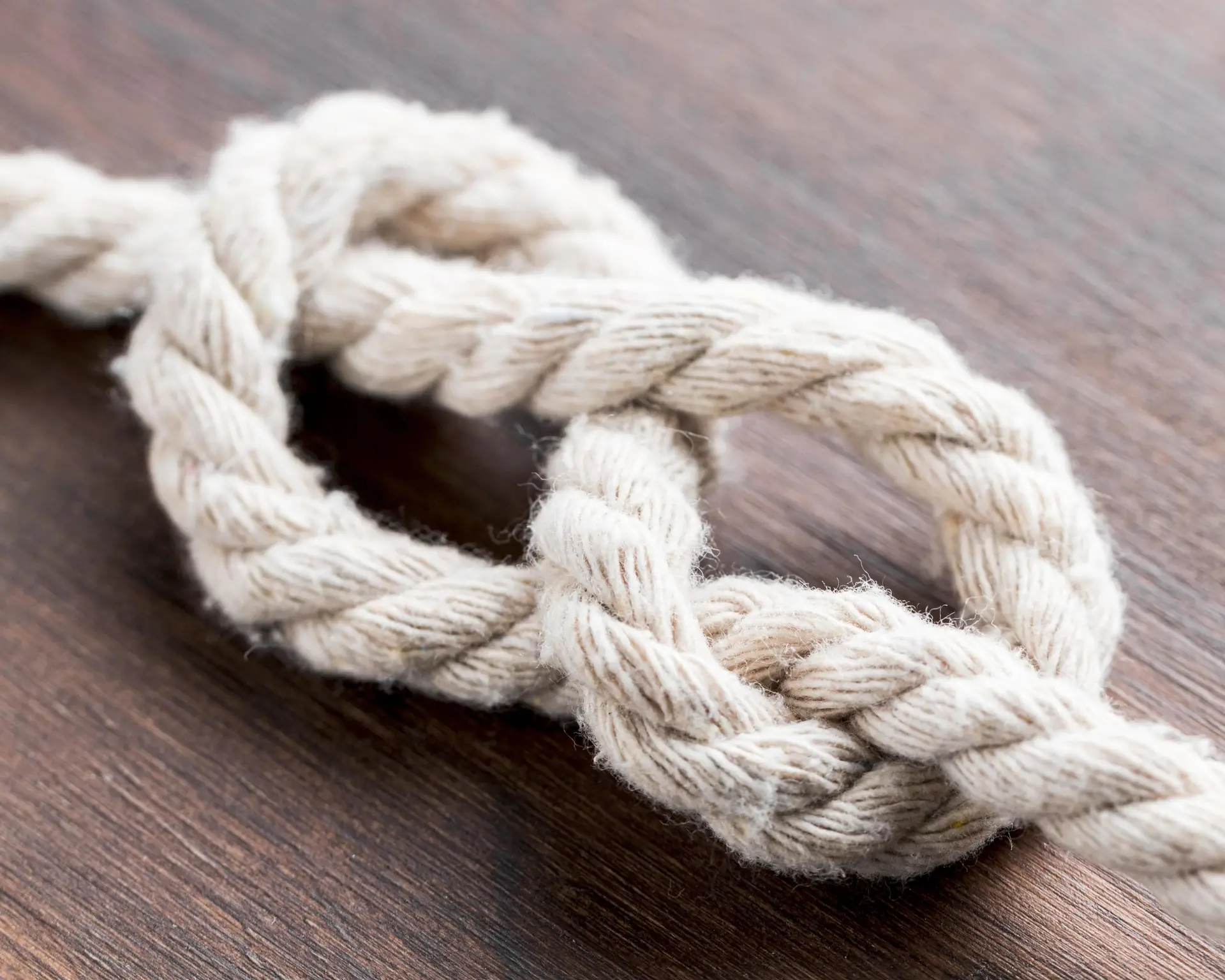
Tying the right knot properly, at the right moment and without hesitation, is one of the skills that distinguishes a capable skipper from someone who still feels nervous afloat. It is not about collecting impressive knots, but mastering a handful of genuinely useful ones for both securing the boat and dealing with an unexpected problem during a manoeuvre. In addition, basic nautical knots are part of the practical syllabus covered during the official training for recreational boating qualifications. Knowing them well is therefore about more than safety: it also helps you pass.
Why these knots rather than others?
There are hundreds of nautical knots, but most recreational boating situations can be handled with very few. The key is to choose knots for boating that meet three conditions: they should be quick to tie, hold under tension without working loose, and be easy to undo even after being loaded. This is essential when a line has spent hours supporting the boat’s weight or pull.
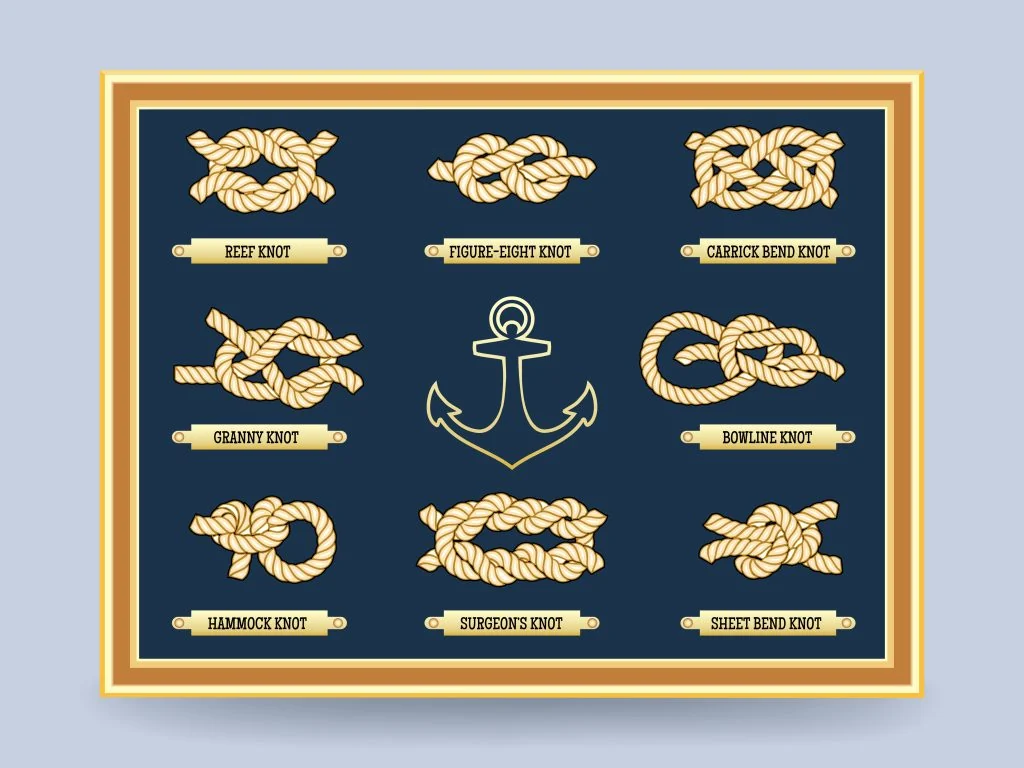
That final point is what most clearly separates a good nautical knot from an improvised one. A knot that jams so tightly it has to be cut is no use aboard, just as one that works loose with the boat’s movement is not. That is why the same names recur: bowline, sheet bend, clove hitch, reef knot and bowline on a bight. Each has a very specific function, and together the five cover virtually any situation involving mooring, towing or an emergency manoeuvre.
Essential knots and how to tie them
- Bowline: this is undoubtedly the most important knot every sailor should know, and the one most often asked about when someone searches for how to tie a bowline. It forms a fixed loop that neither tightens nor slips under tension, and is used to secure a line to a bollard, secure a person with a rope or form the eye of a mooring line. Make a small loop in the rope, pass the working end up through it, take it around the standing part from behind and back down through the same loop. With practice, it takes only seconds and can be tied with one hand, particularly valuable in poor visibility or rough seas.
- Sheet bend: this joins two ropes of different thicknesses, a common requirement when extending a mooring line with whatever rope is available. It is quick to tie and, unlike a reef knot, does not slip when the ropes have different diameters.
- Clove hitch: the standard knot for quickly attaching a line to a fender, bollard or any cylindrical object. It consists of two crossed turns around the object and is tightened with a simple pull. Its weakness is that it can loosen under uneven tension, so for permanent moorings it is usually reinforced with an additional turn or combined with another knot.
- Reef knot: the simplest of all, useful for temporarily joining two ropes of the same thickness, for example when preparing fenders or tidying excess rope. It is unsuitable for heavy loads, but quick to tie and easy to recognise visually as correct or incorrect.
- Bowline on a bight: a variation of the bowline tied by folding the rope in half. It is useful when a loop must quickly be thrown to another boat or a mooring point without access to the working end.
The most effective way to learn these knots is not to read about them, but to tie them dozens of times until you can do so without thinking. Many skippers recommend practising with a piece of rope at home, while watching television or travelling, until the movement becomes automatic. At sea, with wind, movement and sometimes little light, there is no time to hesitate over which knot to use or how to start it.
Their importance in the assessment and real navigation
The nautical knots taught for PER do not usually appear as a standalone theory question, but they are part of the mandatory navigation and safety practical training. The instructor assesses whether students can confidently carry out mooring and the berthing and unberthing manoeuvres already explained in detail on the blog. A skipper who masters these knots gains safety, speed and confidence in front of the rest of the crew, particularly noticeable during the practical training for PNB and PER, where real mooring and anchoring situations are practised from the first day.
Beyond the assessment, these are the knots actually used whenever you go boating: leaving harbour, coming alongside another vessel, securing a fender or towing another boat in an emergency. That is why sailing courses and the practical training for recreational qualifications place such emphasis on repeating them until they become automatic, rather than an exam exercise forgotten a few months later. If you are preparing for your qualification and want to strengthen these skills before the official practical training, Anclademia supports you step by step in both the theory and real handling aboard.
Learn on board too
Explore our courses and practical training in Barcelona and choose your next step with the Anclademia team.
Keep exploring
Related articles
 Navigation
When and how are distress signals used?
Do you know when and how to use distress signals? Learn how to call for help correctly and save lives. Click here for more information!
Read article Navigation
Different types of life jackets
The life jackets are a fundamental element of security in any nautical activity . Whether you are sailing on a motorboat,…
Read article Navigation
Difference between a buoy and a beacon
When starting to navigate, one of the first essential aspects that every navigator must understand is the maritime signal system. These…
Read article